Recognition is the real asset
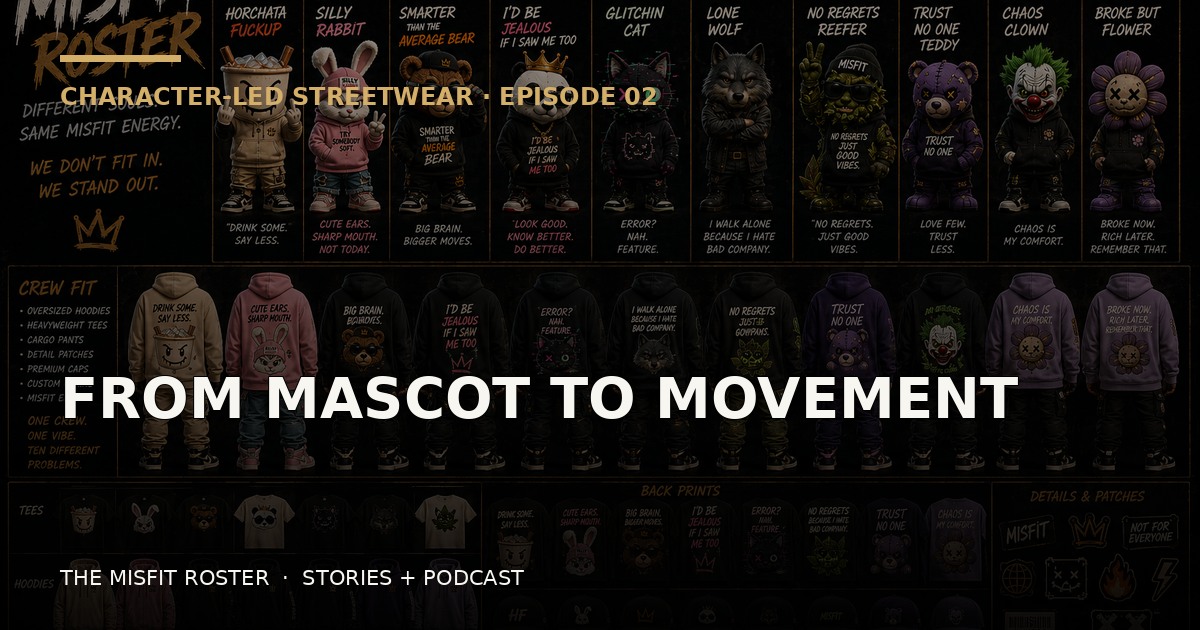
A strong mascot is not simply an illustration. It is a repeatable visual identity with a posture, expression, phrase, silhouette, and emotional point of view. When those elements stay consistent, people can identify the character across a hoodie, a five-second video, a school performance, or a festival appearance.
Apparel is the uniform
The clothing should not compete with the mascot. It should make the mascot feel more real. That requires consistent founding graphics, intentional placements, wearable colorways, and silhouettes that can actually be produced. The same apparel worn by the mascot can then be worn by dance crews and supporters, connecting the fictional character to a real community.
Movement makes the character believable
Static images establish the look. Motion establishes personality. A kneeling entrance, a specific dance style, a reaction shot, or a recurring gesture can give each mascot a recognizable physical language. Short-form video works best when the choreography reflects the character rather than using the same movement for every member of the roster.
Participation expands the canon
The audience should not only watch the roster. They should be able to spot mascots at live events, record them, tag @misfitroster, wear the apparel, and create their own response content. Those actions produce a living archive of how each character is interpreted in public.
Consistency protects the brand
The fastest way to weaken a character-led brand is to change the mascot design, clothing, or attitude from one asset to the next. Every appearance should reinforce the approved character model and founding collection. Variety should come from setting, people, choreography, and story—not from redesigning the mascot each time.
Published by The Misfit Roster Editorial. This written edition is the source article for a future podcast adaptation; no audio episode is represented as published yet.